
FOREWORD
Originally published in 1866 in the journal Slovo under the pen name “One in the Name of Many”, this 2,000-word manifesto by Ivan Naumovych written in Jaziche, a literary language combining common vernacular and elements from Russian and Church Slavonic, marked the beginning of a new era for the Galician Ruthenians. From the outset Naumovych attacks the historical loyalty that Ruthenians had to the Habsburg crown, comparing their decisions to the more effective, confrontational strategy of the Poles who gained extensive privileges in the fallout of Austria’s loss in the Austro-Prussian War. During the same time period the political leaders of the Galician Ruthenians had made no demands to the Emperor, eventually receiving no benefit in return. This would leave a political vacuum as those in charge, commonly referred to as the Saint George Party (sviatoiurtsi) and characterized by their conservative beliefs and pro-Austrian stance, would have their reputations tarnished in the process. From their ashes would rise a Russophile movement that maintained dominance in the region until the middle of the 1880s. In the article Naumovych would also write on the necessity of the Russian language as a literary standard, the concept of a united Rus’ identity, and the problems that contemporary activists had faced in their political efforts.
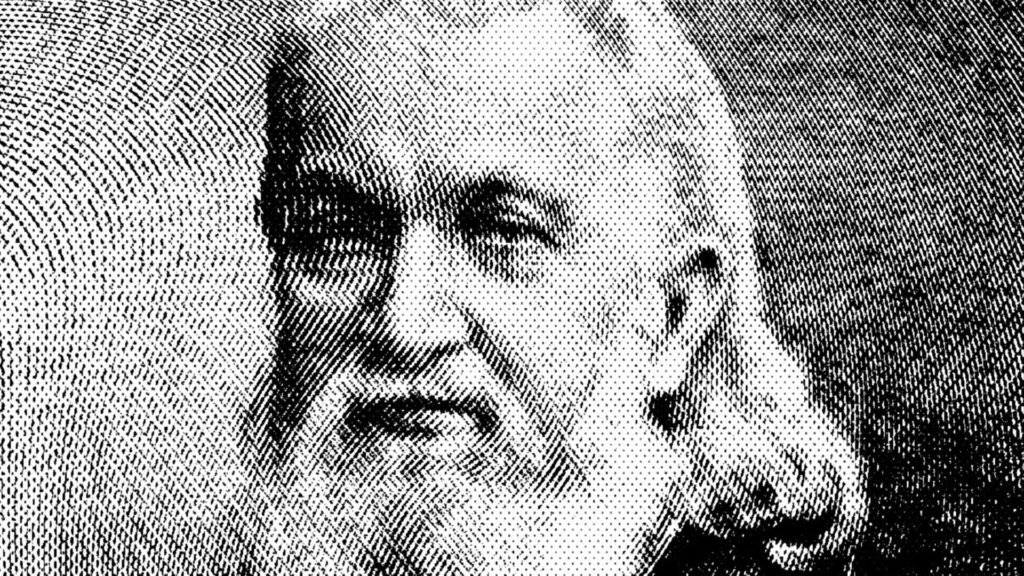
Ivan Naumovych (born in 1826 in Kizliv) was raised in a Polish speaking household of Ruthenian origin and had originally partaken in various Polish revolutionary activities in his youth. His views would drastically change around the time of the national revolutions of 1848 in a reorientation back toward his ancestral heritage. This initial Polonophile stance to unlikely conversion was not an uncommon occurence in the Galician Russophile world as the ideas of romantic nationalism swept across Europe in the 19th century. Just a generation before Ivan, early-era Galician Russophile writer and historian, Denis Zubrytsky (1777-1862), had followed a similar path. In 1851 Naumovych would marry and be ordained as a priest after finishing his studies in Lwów and go on to serve in local towns around Galicia. From there he would rise to become one of the most prominent figures in local Russophile politics through his activism and many writings, even serving a term in the Austrian parliament in the 1870s. He would also become well known to activists in Carpathian Rus.
The golden age of Galician Russophilia would last until the early 1880s when many of the movement’s leading figures were prosecuted due to increasing fear in Vienna. In 1882 Naumovych himself would be charged with treason by the Austrian government. He would be acquitted of this charge but convicted of a lesser crime, from which the punishment was eight months in jail. A short time later he would also be expelled from the Greek Catholic Church. Adolf Dobriansky would write a work attempting to defend Naumovych after these events in 1883. Having his livelihood tarnished and under constant scrutiny by the authorities, he would join the Orthodox Church and move to Kiev, then part of the Russian Empire. In 1891 Naumovych would pass away in the town of Novorossisyk on the Black Sea, with his plans of helping to settle Ruthenians living in Austria-Hungary left unfinished.
A GLIMPSE INTO THE FUTURE
Originally published in Slovo – 1866
These days, news spreads in our country that a Polish delegation, taking advantage of the government’s difficult situation due to the present and unfortunate war, had secured a promise in Vienna that Galicia would be honored with the chancellorship in the person of Count Gołuchowski, while a statesman, who during the last Sejm session was able to gain significant popularity with our Polish public, was to be appointed as his deputy. We can’t know how much truth there is in that news. However, it only seems to be sure that in addition to the cadastral problem, the delegation mentioned above had the right to propose their plans for the future of Galicia to the Ministry. As good-hearted people, besides being attached by filial affection to our most August Dynasty, we, Rusyns, have not sent any delegation from our side but have only sent a missive to express our loyalty and unwavering faithfulness to His Majesty, the beloved Emperor. In this way, we wish to ease His Majesty’s heart of the grief and pain caused by the proud conquerors both to His Majesty and to all the peoples whose fates are tied to Austria and the Serene Habsburg Dynasty. This problem seemed to us to be inappropriate, and even premature since it would put pressure on the government and the Emperor, now that the war had broken out and the Battle of Königgrätz had been disastrous for Austria, and everything was devoted to the defense of the state. We rely on our natural rights, our Monarch’s long-standing word, and our government’s righteousness. We were, and we still are, firmly assured that, as soon as peace returns, the voice of every people of Austria will be heard, and not one of them will be sacrificed to another, and not one of them will be lost!
Thus, we hoped that we would not be thwarted by the noisy contributions and complaints of the Polish majority in the Galician Sejm about the chancellorship, the tensions, the official language, and school matters, for we were, we may say, confident that His Majesty will not sanction the unilateral, biased, and for the good of Austria, endlessly depressive decisions, which the Russian people, as one man, through their advocates in the Sejm, voted against and protested.
But nowadays, who can guess whether our good-heartedness and tact, or our opponents’ propaganda will ultimately be more successful?
The news spreading about the chancellorship and the certainty that it is being discussed within Polish circles involuntarily fills us with fear, and we begin to look into our future with great disbelief… Just as our ambassadors, namely the excellent and favorite of all Galician Rus, Kuzemskyi, cheerfully and fearlessly spoke the most sacred truth in his own words and stated our view of the chancellorship: we all cannot agree with this thought. We cannot connect it in any way with the good of Rus and the good of Austria. We imagine our future chancellor (the Poles demanded that Count A. Gołuchowski should be appointed chancellor) not as a neutral person who can rise above the prejudices and tendencies of his tribe nor as a person who wins the confidence of the entire Galician population. We instead see in him an irreconcilable instrument of ultramontanism, a man who is genuinely devoted to Roman Catholicism and the good of his Polish nation and who has made significant contributions to it, but who sees the Russian man as a rebel against Poland and a schismatic, who, in the name of Rome and Poland, has to be subdued or even destroyed!
If a man with such beliefs were to stand between us and the Monarch; if he were to take public education into his own hands; if the teryаo* were to fall, and the Russian clergy, as a solid yet solitary pillar of the Russian people, were to be put at the mercy or disfavor of the Polish nobility and Latin priests; if the Polish language were to be introduced as a national official language in the administrations, courts, councils and district and local authorities by force, as we can already see happened in Bezirks and famine committees, where Polish was introduced as a single official language through backroom politics and flattery; if little by little, according to the unforgettable words of Ambassador Kuzemskyi “the kinsmen of Mr. Chancellor” were to take control over Rus from the minister’s chamber to every prefect’s and juror’s house; if, as is already practiced today, the path to the highest posts in the administrations and parishes were to be open for double-dealers and traitors of the Rus, while a well-thought-out persecution system was introduced into life against faithful Russian sons, as it had been for the past memorable decade, the question is whether our Rus will survive such an uneven struggle; whether it will not give up hope; whether it will not lose heart; and whether in the end it will not fall victim to Poland once more for some time to come?! Nothing is impossible under the sun. It is hard to believe that the Rus could still be Polonized while the Russian crosses are still on top of churches, the Russian language rules, and the Russian words are spoken. The Russian songs are sung, and the Russian feelings are in the hearts of the Russian people. Yet, it cannot be concealed nowadays that the heart of every patriot should involuntarily tremble before the said chancellorship…
And now there is another question on the agenda, which we ask ourselves too late. But we, of course, must ask it now, right now, at this critical moment, to justify ourselves before the history of the past and the future. Why wouldn’t any of the Austrian people, who number as many souls as our Galician and Uhric [Subcarpathia and Pryashiv] Rus, within such definite national borders as ours, constituting a mass of people like ours, start worrying about their existence at the sight of one man, as we must now sorrowfully say about ourselves? Does an Austrian Serb or a Roman tell his children today, “Children, today I, your father, am a Serb or a Roman, but the news has come that this or that man, as a result of the present government’s policy, may be appointed chancellor, so you will no longer be what I am—Serbs or Romans—but you will become Magyars and deny your Serbian or Roman mother?”… No! Not a single Serbian or Romanian father would pronounce such nonsense today, for the agency of those nations has always been straightforward and clear. They have developed a true national spirit, independent of the personalities of any ministers and chancellors. Yet our Russian fathers, looking at their children today, can tell them, “Children, I gave birth to you and brought you up as Russians under circumstances favorable to [the] Rus, but today they are talking about the Polish chancellorship. It will be difficult for you to remain Russians, for you will be Polonized. They will not let you live in your mother country unless you reject your Russian mother and become Poles!”
Our agency has not been straightforward and clear, and we have not yet developed the true spirit of the people independent of the personalities of any ministers, chancellors, and governors! Have we declared what we are, what our past is, and what our historical rights are to the world? No! We have been playing around with the so-called Opportunitäspolitik (policy of benefits), but now we must reap its bitter fruits. In 1848, they asked us: What are you? We said we were the most humble Ruthenians. (O Lord, if only our forefathers learned that we called ourselves the name which our worst enemies had tagged us with during the persecution, they would have turned over in their graves!) So what was the consequence of all this? Here is what a Viennese Jew and comedian Safir said about us, Seiv der Erfindung der Ruthenen zwei Jahre [it has been two years since the Ruthenians were invented]. Later, the Poles themselves miscalled us as ruteńcy, ruteńczyki. “Perhaps you are the Russians?” asked us Stadion. We swore with our body and soul that we were not the Russians—not Russen—but that we were Ruthenians, that our border was on the Zbruch River, that we turned away from the so-called Russen as if they were a bunch of schismatics with whom we wanted nothing to do.
“What is your written language?” They questioned us further. We said that our written language was the one in the church books, and again, we swore our soul and body off the Civil Script and that it was the Serbisch-Russiche Zivilschrift (Serbian-Russian Civil Script), which we reject as foreign. So, it should not surprise anyone that we, Ruthenians, were not allowed to use the Russian language, the Russian Civil Script, or Russian cursive during a particular time. As Ruthenians, we were free to only type and write our appeals to administrations and courts in the language used in the marketplaces and taverns using the Church Cyrillic alphabet. Back in 1848, we did not say that we were Russians and that our national border is not the Zbruch, but it is beyond the Dnipro! We would have been connected with a thousand-year history, the church rite, our language, literature, and great people if we had. They would have feared we would fancy separating from Austria, and they would not have allowed us any constitutional liberty. We then would be weak, and they would suffocate us so that we would not breathe our Russian breath. The reason for this may be considered from a historical point of view, and our flattery may be partly justified. However, all of it turns out to be ludicrous, just like this Russian person who was ridiculed for why Russians attending the “Baurat” (aulic council) of Count Stadion did not once tell the whole truth that they are not some sort of Ruthenians†, but are still Russians—Russen. In reply, Stadion naively uttered, “And what would the Polish archbishop say to this?!”
We imagine that the Austrian Emperor, who gifted the Constitution to our Austrian peoples, would not have made any exceptions for the Galician Russians if we had truthfully and introduced ourselves in our essence. The fear about the national bonds ultimately leading to political connections was and will always be in vain. When Italians conquered their tribespeople in Switzerland in 1859 to annex them into the state of Italy, the tribespeople announced that they were happy in Switzerland and did not wish for reunification. And even though we, Russians, have not been particularly happy with our relations with our fellow Poles within the borders of Austria, we have never thought of breaking away from the constitutional Austria to which fate has bound us and to which constantly binds us to the hope for a better future. In the memorable year of 1848, the government’s fears were groundless, and our policy and attitude towards the archbishop were inappropriate.
But little by little, it became clear. Just one or two years after it, Rus started to resuscitate, and it seemed for a moment that its literature would not succeed without the Schmidt’s dictionary, that this Russian dictionary was as good for St. Petersburg as it was for Lviv, that it contained a treasure of the truly literary, written, Russian language. It soon appeared that Galician Russians, having looked back at history, concluded that not only had their language been spoiled by Poland, but their rite had fallen under the yoke of latinism. It is enough to re-read the book Die Ruthenische Schrift und Sprachfrage [The Question of the Ruthenian Script and Language] to be convinced enough that Count Gołuchowski did not denounce us to the West. On the contrary, he wrote the pure truth about us: our literature gravitates towards the common Russian literature, and our rite towards purification from Latinity. We give him credit for that, and more than him, we accuse our people of inconsequence. Whoever proclaimed themselves Ruthenians in 1848—had nothing in common with the entirety of Rus. They renounced their Civil Script and limited their literature to the 12 Galicia districts only. They could not go beyond those borders, even by constitutional rights. Contrarily, they could develop only within those borders, which they had indicated by themselves. What was Count Gołuchowski to blame for being given an excellent opportunity to defeat the Rus by his means for the benefit of Poland?
Additionally, the Rus did not manage to come to its senses from the bitter experiences of 1860, namely after the Diploma of October 20, which encouraged all Austrian peoples to develop on the basis of their historical legends. Even then, we were still Ruthenians and were angry at those who denounced us for striving for literary union with the whole of Rus, not to mention the fact that we do not have any great writers who believe in the brilliant future of exclusively Galician-Russian literature… At the Lviv Sejm, where the best opportunity to speak clearly both to the Poles and to Europe was found, none of our people stated that all the efforts of the Polish and their diplomacy to turn us into a separate nation of Uniate Ruthenians had proven futile and that Galician, Uhric, Kievan, Muscovy, Tobolsk, etc. Rus, when viewed ethnographically, historically, lexically, literary, ritually, are the same Rus, besides the fact that in Galicia, Rus is faithfully devoted to its beloved Monarch and his glorious dynasty. At the same time, the Rus abroad is also dedicated to their Monarch and their dynasty. At the Lviv Sejm, there was an excellent opportunity to clearly and frankly declare that our historical tradition is our fathers’ original (age-old) pure and perfect Russian rite and that no reasonable person could be surprised if Rus, based on the rite and faith, ardently desired to free itself from the bonds of Jesuitism. Who would have slandered us if we had said all this boldly and frankly? Who would have denounced us about Moscophilia and schism? Who would have dared to say that our aspiration is impure and unrighteous? But as long as we, Ruthenians, limit our language and literature to the peasant houses of twelve Galician districts, not recognizing the entirety of the Russian world—woe to us from the Polish chancellorship!
Being in good health, we are writing to apologize for these so-called slanders. We swear on our soul and body. But no one will believe us, for it is not possible to believe in the impossible. No one will save us. No one will defend us… For this reason, we believe it is time to cross our Rubicon and openly say for everyone to hear: we cannot separate ourselves from our brothers with the Great Wall and leave the language, literary, and folk connections with the entire Russian world behind! We are not the Ruthenians from 1848! We are the real Russians! But, as we have always been, we will remain unwaveringly faithful to our Most August Austrian Monarch and Their Highness the Habsburg Dynasty in the future. Having made such a statement, we will not have to fear the Polish chancellorship. No one will be able to reproach us for our language being unsuitable for higher schools, for it being not fit for official use, etc., because our language and our Russian literature have by far and away outmatched Polish, which the Poles themselves cannot object to in the Sejm or any place else.
One in the name of many.
* We were unable to find out what this word теряо means. It is likely a borrowing from Church-Slavonic or another language.
† Ruteny is used here in the original version and throughout parts of the essay, which translates to Ruthenian(s) but is the latinized version of this name. Natives, as Naumovych used in the first paragraph of this essay, would have written Rusyny. There is room for interpretation regarding the purpose for using this foreign spelling but it is likely linked to his critique of the Starorusny [Old Ruthenians], in particular its leadership called the sviatoiurtsi [Saint George Party], that he believed had failed as the intelligentsia and leaders of Galicia during the era he is writing about. What he exactly means by not being ‘Ruthenian”, is somewhat blurred because of this.